Debate reform today
Presidential debate reform today
The Citizens' Debate Commission went quiet after 2004. Twenty years later the two major-party campaigns did what it had predicted they could always do: they cut the Commission on Presidential Debates out of the process and set the terms themselves. This page brings the archive's story up to the present, with every claim drawn from current reporting and the commission's own statements.
The 2004 argument, in one paragraph
The pages preserved on this site make a single case. The Commission on Presidential Debates, created in 1987 with the joint support of the then-chairs of the Democratic and Republican National Committees, was in practice a vehicle for the two major-party campaigns. Behind each debate sat a memorandum of understanding negotiated between the nominees' lawyers, fixing moderators, formats, podium heights and audience rules; the commission accepted the contract and presented the result as its own. The Citizens' Debate Commission proposed an independent, citizen-centered sponsor, a lower five percent polling bar so that a popular third candidate could take part, and formats with follow-up questions and direct exchange. None of it was adopted in 2004, and the organization did not stage debates in 2008 or later.
The commission's own history page still describes the arrangement the reformers objected to. It records that the body was incorporated in Washington on 19 February 1987 after studies at Georgetown and Harvard, that it is a nonprofit 501(c)(3), and that its mission is to ensure general election debates are held every four years. Its 15 percent polling criterion, first adopted in 2000, remains on the books.
The commission's plan for 2024
On 20 November 2023 the Commission on Presidential Debates announced a conventional four-event schedule for 2024, all on university campuses, all at 9 p.m. Eastern, each 90 minutes without commercial interruption. Candidates would qualify under the same rules as before: constitutional eligibility, ballot access sufficient to win an Electoral College majority, and an average of at least 15 percent in five national polls chosen by the commission.
| Date | Host | Location | Debate |
|---|---|---|---|
| 16 September 2024 | Texas State University | San Marcos, Texas | First presidential |
| 25 September 2024 | Lafayette College | Easton, Pennsylvania | Vice-presidential |
| 1 October 2024 | Virginia State University | Petersburg, Virginia | Second presidential |
| 9 October 2024 | University of Utah | Salt Lake City, Utah | Third presidential |
The plan was already on thin ice. In April 2022 the Republican National Committee had voted unanimously at its spring meeting in Memphis to require future Republican nominees to appear only in party-sanctioned debates, with chair Ronna McDaniel calling the commission biased. Both campaigns also complained that September and October dates fell after early and mail voting had begun in many states.
15 May 2024: the campaigns go around the commission
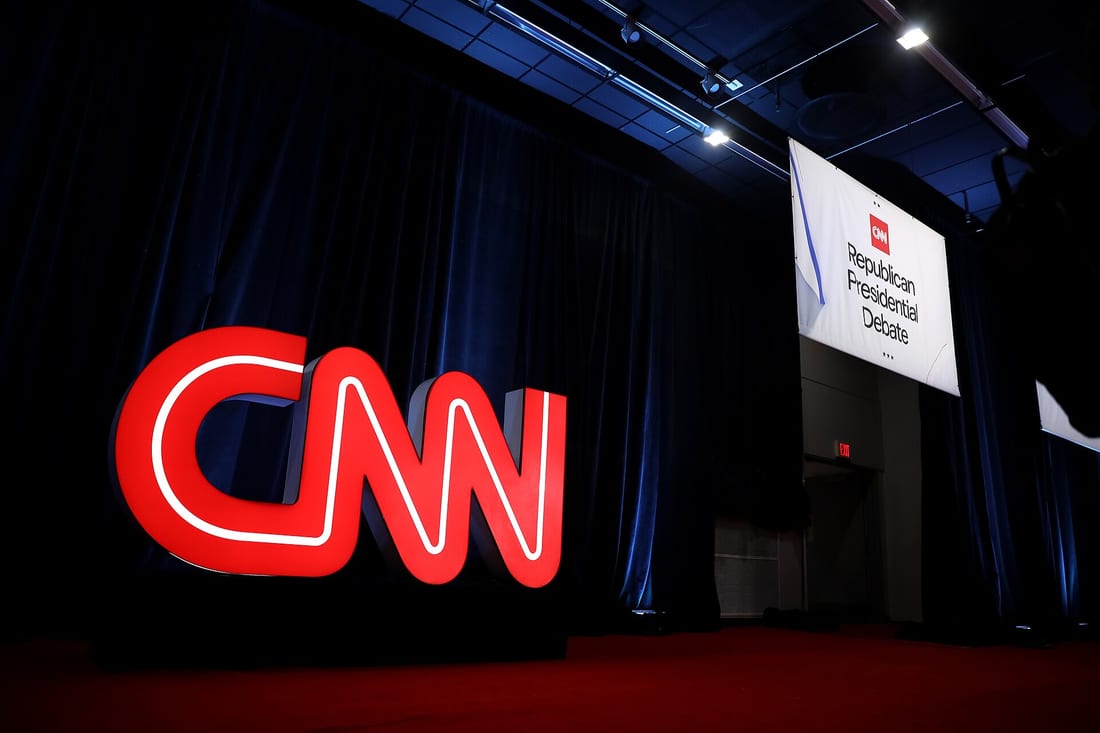
On 15 May 2024 the Biden campaign sent the commission a letter saying the president would not debate under its sponsorship. Campaign chair Jen O'Malley Dillon gave three reasons, as reported at the time: the commission's calendar ran past the start of early voting, its debates had become a spectacle built around a live partisan audience, and it had proved unable to enforce its own rules. The campaign proposed two debates, in June and September, held in television studios with no audience and microphones that could be cut. The Trump campaign accepted the same day. Within hours CNN announced a debate for 27 June and ABC News one for 10 September.
The commission, which had planned every general election debate since 1988, was not consulted. Its first response, carried by the Associated Press, was that it had been established in 1987 specifically to ensure that such debates reliably take place and that it would continue to be ready to execute its plan. Co-chair Frank Fahrenkopf, who had also been RNC chair when the body was founded, told a meeting that there is no way you can force anyone to debate, and in a CBS News interview on 31 May he predicted the network arrangement would founder on details such as staging and commercial breaks. It did not.
The commission regrettably announced on 24 June 2024 that the four campuses were released from their contracts, adding that it stands ready to sponsor 2024 debates should circumstances change. Circumstances did not change.
The debates that actually happened
Three general election debates were held in 2024, each produced by a single network under rules negotiated directly with the campaigns. It was the first presidential cycle since 1988 in which the Commission on Presidential Debates hosted none of them.
| Date | Host | Candidates | Moderators | Venue | Key rules |
|---|---|---|---|---|---|
| 27 June 2024 | CNN | Joe Biden, Donald Trump | Jake Tapper, Dana Bash | CNN studios, Atlanta | No audience; microphones muted except for the speaker; 90 minutes with two commercial breaks; no props or notes |
| 10 September 2024 | ABC News | Kamala Harris, Donald Trump | David Muir, Linsey Davis | National Constitution Center, Philadelphia | No audience; muted microphones; same rules as June |
| 1 October 2024 | CBS News | Tim Walz, JD Vance | Norah O'Donnell, Margaret Brennan | CBS Broadcast Center, New York | No audience; microphones live by default with the network reserving the right to mute; 90 minutes with two breaks |
The June debate changed the race. Biden's performance was widely judged a failure, and on 21 July 2024 he ended his campaign and endorsed Vice President Harris, who took his place on the ticket and in the September debate. Nielsen counted 67.1 million television viewers for the ABC debate, carried live on 17 networks, up sharply from the roughly 51 million reported for CNN's June event. The CBS vice-presidential debate filled the slot the commission had planned for Lafayette College. A Fox News proposal for a second Harris-Trump debate in September never materialized.
The commission's co-chair was not impressed by the network format. Interviewed by The Hill in late June, Fahrenkopf asked why a host would break twice to run ads, questioned whether a network's own post-debate panel could offer fair analysis, and criticized the removal of the in-person audience.
Who was still left out
The change of sponsor did nothing for candidates outside the two major parties. CNN set its own entry test, closely modelled on the commission's: 15 percent in at least four approved national polls and ballot access in states worth 270 electoral votes. Independent candidate Robert F. Kennedy Jr. reached 15 percent in three polls and, by the Associated Press count published on 20 June, was confirmed on the ballot in six states worth 89 electoral votes. CNN ruled him out. His campaign filed a Federal Election Commission complaint alleging collusion, which the network called without merit, and he described his exclusion as undemocratic and cowardly. ABC applied an equivalent 15 percent test in September, and no third-party candidate qualified.
That outcome is the mirror image of the Citizens' Debate Commission's 2004 proposal, which would have admitted any candidate on enough ballots to win who reached five percent in national polls or whom a majority of voters wanted to see on stage. In 2024 the threshold did not move; only the name of the gatekeeper did.
Where the commission stands now
The Commission on Presidential Debates has not dissolved. Its board released the 2024 host campuses on 24 June 2024 in a statement signed by co-chairs Antonia Hernandez and Frank Fahrenkopf, and the organization continues to exist as a nonprofit with the same leadership. Fahrenkopf told The Hill in June 2024 that the commission is not going away and that it would be back in 2028. We found no announced 2028 schedule, host sites or sponsorship agreement as of this writing, and no public indication from either national party that it intends to return to commission-run debates.
Commentators split on what should follow. Norman Ornstein, writing for Brookings on 12 June 2024, argued that the commission for all its faults had guaranteed that debates happened at all, that candidates would find it easier to skip them without an institution behind the calendar, and that the body should be reformed rather than abandoned, with expert questioners and moderators empowered to cut microphones. Others concluded that the campaigns' direct deal with the networks had made the commission obsolete unless it rewrote its rules. Neither camp proposed what the reformers of 2004 wanted: a sponsor independent of both the parties and the broadcasters.
What 2024 delivered, and what it did not
Read against this site's archived pages, 2024 settles one argument and leaves the rest open. The Citizens' Debate Commission said in 2004 that the commission's authority was borrowed from the two campaigns and would last only as long as they found it convenient. In 2024 the campaigns withdrew that convenience, and the commission's schedule evaporated within six weeks. On that point the critics were right.
- Delivered: the memorandum-of-understanding model was dragged into daylight. Rules on microphones, audiences, props and timing were published by the host networks before each debate, rather than buried in a campaign contract that the commission declined to release.
- Delivered: the calendar moved earlier. The first debate came in June, before either convention, which the reformers had argued for as a way to reach voters before ballots went out.
- Delivered: the live partisan audience, a fixture the 2004 plan called a distraction, was gone from all three events.
- Not delivered: the candidate pool. Two major-party tickets debated, as in every cycle since 1996, and the 15 percent bar survived the change of sponsor intact.
- Not delivered: an independent sponsor. Control passed from a body founded by the two parties to the campaigns themselves, with commercial networks as hosts. No citizen-based organization had a seat at the table.
- Not delivered: format reform. Follow-up questions and candidate-to-candidate exchange, central to the 2004 plan, were constrained rather than expanded by muted microphones and fixed two-minute answers.
The honest summary is that 2024 proved the diagnosis and ignored the prescription. The old sponsor lost its monopoly, but the two campaigns kept the one thing the reformers most wanted to take from them: the power to decide who stands on the stage and on what terms. Whether any institution fills that gap before 2028 is, at the time of writing, an open question.
Questions people ask
- Who ran the 2024 presidential debates?
- The networks did, under rules agreed directly with the campaigns. CNN hosted Joe Biden and Donald Trump in Atlanta on 27 June 2024, ABC News hosted Kamala Harris and Donald Trump at the National Constitution Center in Philadelphia on 10 September 2024, and CBS News hosted the vice-presidential debate between Tim Walz and JD Vance in New York on 1 October 2024. The Commission on Presidential Debates, which had organized every general election debate from 1988 through 2020, hosted none of them.
- Why did the Biden and Trump campaigns bypass the Commission on Presidential Debates?
- In a 15 May 2024 letter the Biden campaign said the commission's September and October dates fell after early voting had begun, that its debates had become a spectacle built around a live audience, and that it could not enforce its own rules. It proposed studio debates in June and September with no audience and mutable microphones. The Trump campaign, whose party had voted in 2022 to boycott commission debates, accepted the same day.
- Is the Commission on Presidential Debates still active?
- Yes, as an organization. It released its four 2024 host campuses from their contracts on 24 June 2024 but said it stood ready to sponsor debates if circumstances changed, and co-chair Frank Fahrenkopf said it would be back in 2028. As of this writing we found no announced 2028 schedule or any commitment from either party to return to commission-run debates.
- Did any third-party candidate take part in the 2024 debates?
- No. CNN required 15 percent in at least four approved national polls and ballot access in states worth 270 electoral votes. Robert F. Kennedy Jr. reached 15 percent in three polls and was confirmed on far fewer ballots at the 20 June deadline, so he was excluded; his complaint to the Federal Election Commission did not change the outcome. ABC applied a comparable test in September and no third candidate met it.
- What did the Citizens' Debate Commission want?
- A sponsor independent of both parties; a five percent polling threshold, or majority public support for inclusion, in place of the commission's 15 percent; five presidential debates starting earlier in the autumn; and formats with follow-up questions, rebuttals and direct candidate-to-candidate questioning. Its full 2004 plan is preserved on this site. The 2024 debates adopted the earlier calendar and dropped the live audience but kept the 15 percent bar and placed control with the campaigns and networks rather than an independent body.
Sources
- Associated Press (Jonathan J. Cooper): The Commission on Presidential Debates faces an uncertain future after Biden and Trump bypassed it, 15-16 May 2024 (via KPRC Click2Houston)
- Associated Press: Commission on Presidential Debates faces an uncertain future, 16 May 2024 (via Spectrum News NY1)
- NBC News: Presidential debate locations and dates announced for general election, 20 November 2023
- Commission on Presidential Debates: Statement on CPD's 2024 General Election Debates, 24 June 2024
- Commission on Presidential Debates: Overview (founding, mission, 15 percent criterion)
- USA Today: Texas State presidential debate, others canceled as Commission steps down, 24-27 June 2024 (via Yahoo News)
- CBS News: Trump, Biden debate will face obstacles in bypassing commission, co-chair predicts, 31 May 2024
- CBS News: RNC votes to withdraw from Commission on Presidential Debates, 14 April 2022
- CNN: Biden and Trump campaigns agreed to mic muting, podiums among rules for upcoming CNN debate, 15 June 2024 (via CNN Newsource, ABC 17 News)
- Associated Press (Meg Kinnard): RFK Jr. fails to qualify for CNN's debate, 20 June 2024 (via PBS NewsHour)
- NBC News: RFK Jr. fails to qualify for CNN debate between Biden and Trump, 20 June 2024
- HuffPost: Debate Commission Co-Chair Slams CNN Over Rules Of Trump-Biden Face-Off, 27 June 2024
- PBS NewsHour: What to know as Biden drops out of the 2024 presidential race and endorses Harris, 21 July 2024
- Nielsen: Over 67 million viewers tune in for ABC News Harris-Trump debate, 11 September 2024
- CBS News: How the VP debate rules will work for the Walz-Vance 2024 showdown, 1 October 2024
- Brookings (Norman J. Ornstein): The demise of the Commission on Presidential Debates, 12 June 2024
- Wikipedia: 2024 United States presidential debates
- Wikipedia: Commission on Presidential Debates
This page was rebuilt from the Commission’s archived website. It is kept for reference; see the home page for what the Commission was.